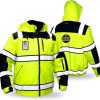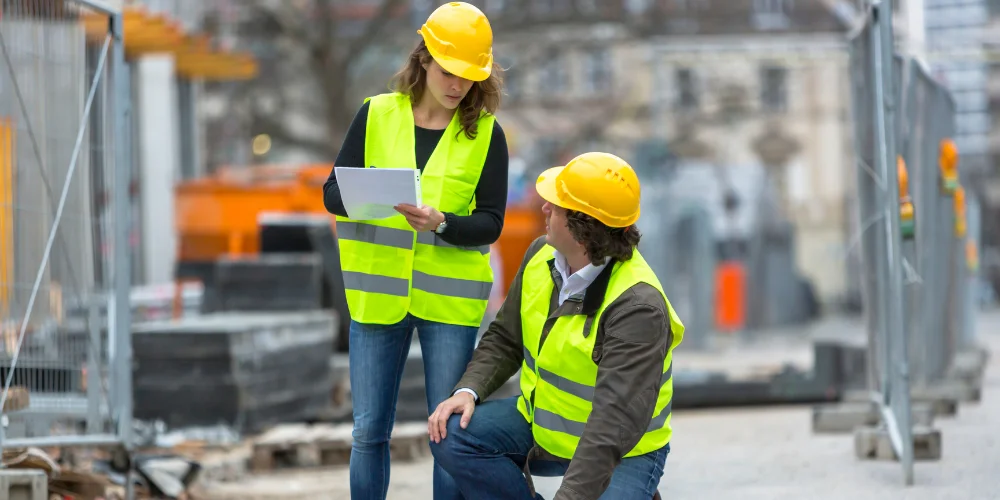
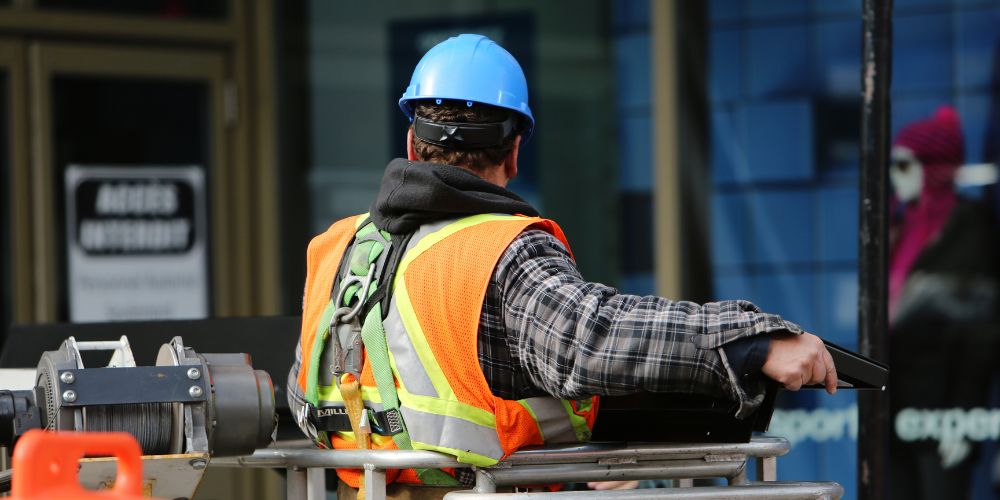
The primary role of high-visibility construction vests is to make workers more visible, significantly reducing the risk of accidents and injuries. These vests are designed with vibrant fluorescent colors like yellow-green or orange, which stand out in various lighting conditions and from significant distances. The vests also include retroreflective materials, enhancing visibility even further, and allowing workers to be clearly seen from all directions and from distances up to 500 feet.
The construction vests ensure that workers are visible and identifiable, providing essential protection against accidents. This is particularly crucial in situations involving construction, heavy machinery, and adverse weather conditions. In environments where movement is continuous or visibility is compromised by weather such as fog, rain, or snow, the reflective and fluorescent properties of the vests could save lives.
Compliance with Safety Regulations
High-visibility safety vests are not just practical—they are also a legal requirement in many construction settings, especially those that involve traffic or the operation of heavy machinery. The Occupational Safety and Health Administration (OSHA) mandates that workers exposed to these hazards wear appropriate high-visibility safety apparel. This regulation helps prevent ‘struck-by’ accidents, which are among the leading causes of fatalities in construction.
The American National Standards Institute (ANSI) mandates that these vests feature a significant amount of reflective material and are in bright, conspicuous colors to maximize visibility against any background. Additionally, the ANSI defines specific requirements for these vests, classifying them into three visibility classes depending on the workplace’s risk level.
- Class 1: Offers minimal visibility and is suited for areas where traffic does not exceed 25 mph.
- Class 2: Required for workers who are near traffic exceeding 25 mph or where tasks divert attention from approaching traffic.
- Class 3: Provides the highest level of visibility and is necessary for workers in extremely dangerous environments where traffic exceeds 50 mph or in poor visibility conditions.
Mitigating Work-Related Injuries
High visibility is essential for the safety of construction workers, particularly in environments where heavy machinery and vehicular traffic are present. The use of fluorescent materials and reflective strips makes workers conspicuous in different lighting conditions, thus preventing accidents and injuries.